“To grant anyone the ability to assemble a meal they will always enjoy.”
This project emerged after reading the article “Is Social Media The New Google?”, which led me to question how I currently search for and prepare recipes, and to expand this reflection with friends and family accustomed to hosting guests or dealing with dietary restrictions.
Bringing together these conversations with articles and public opinions, I found the recipe for frustration: people lacking technical or prior knowledge at the mercy of aesthetic-focused content and controversial blogs, lacking details and proper guidance.
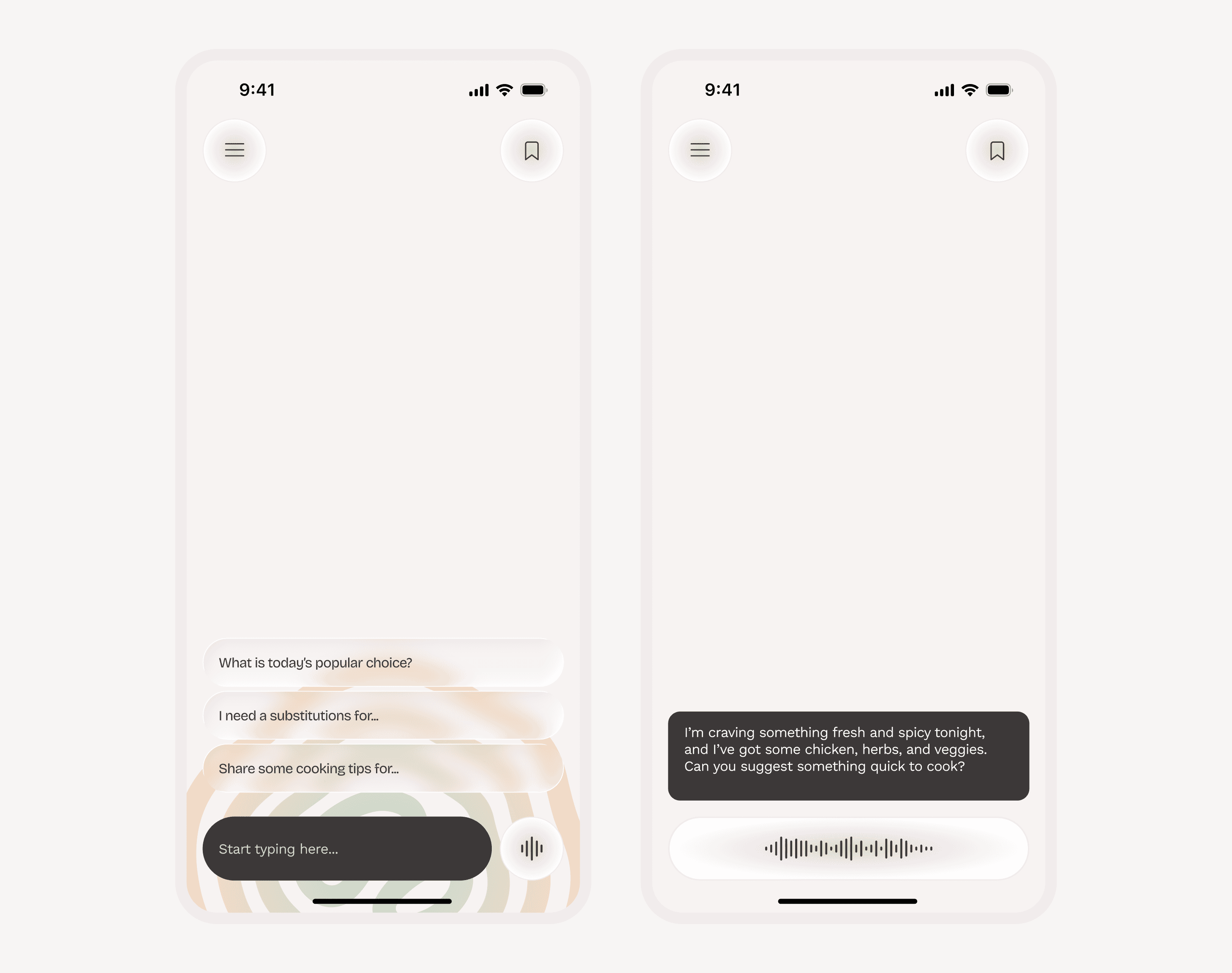
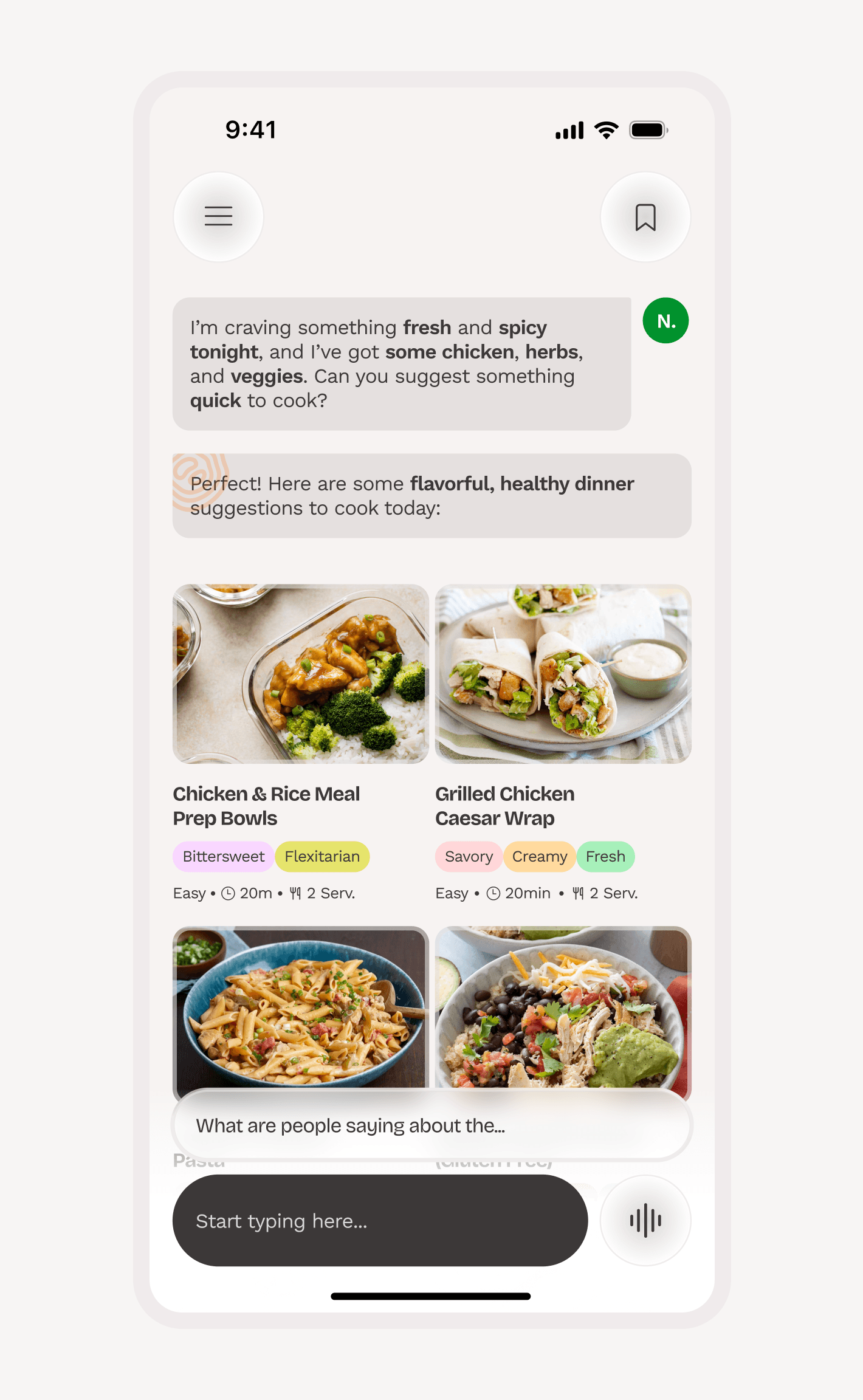
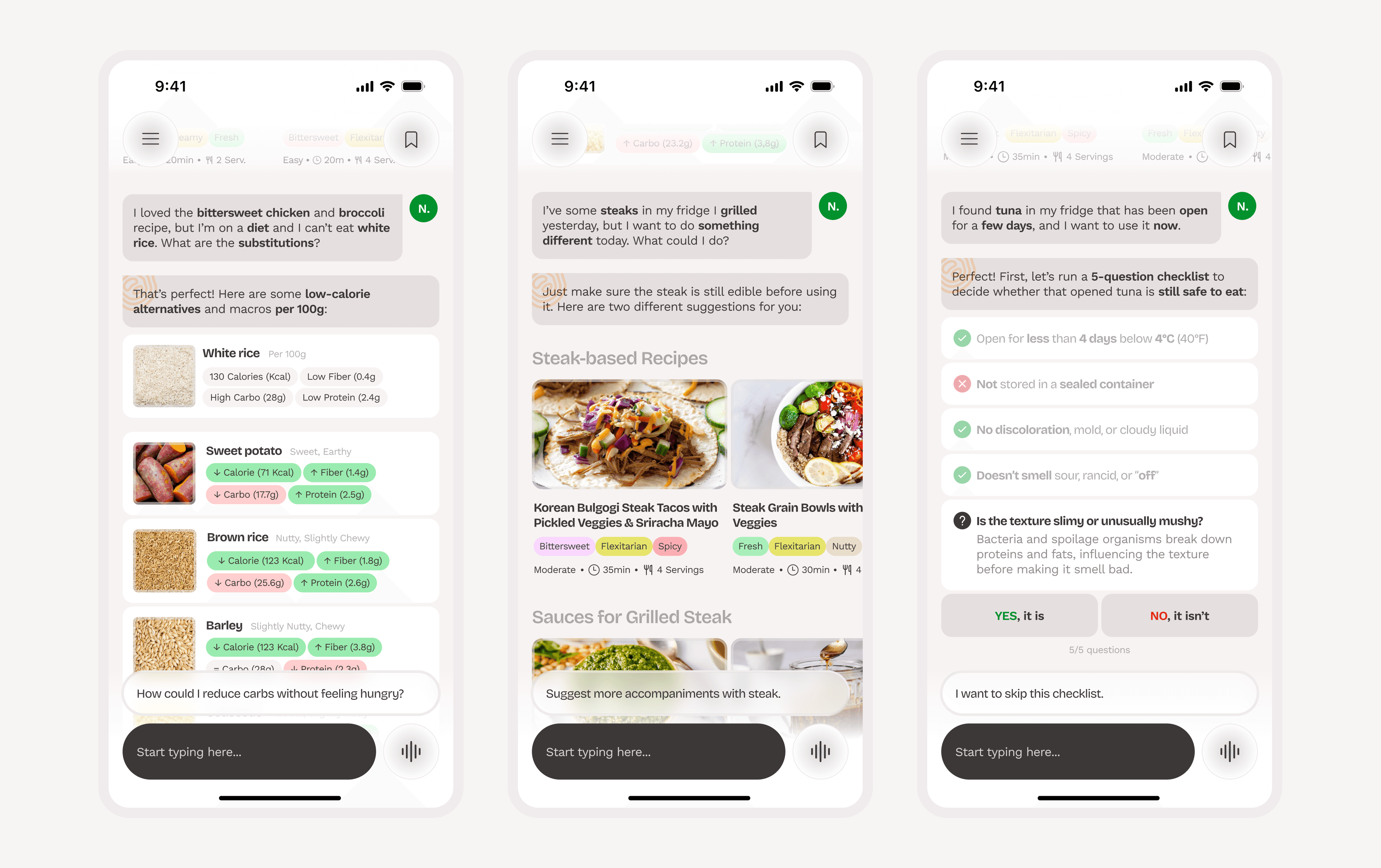
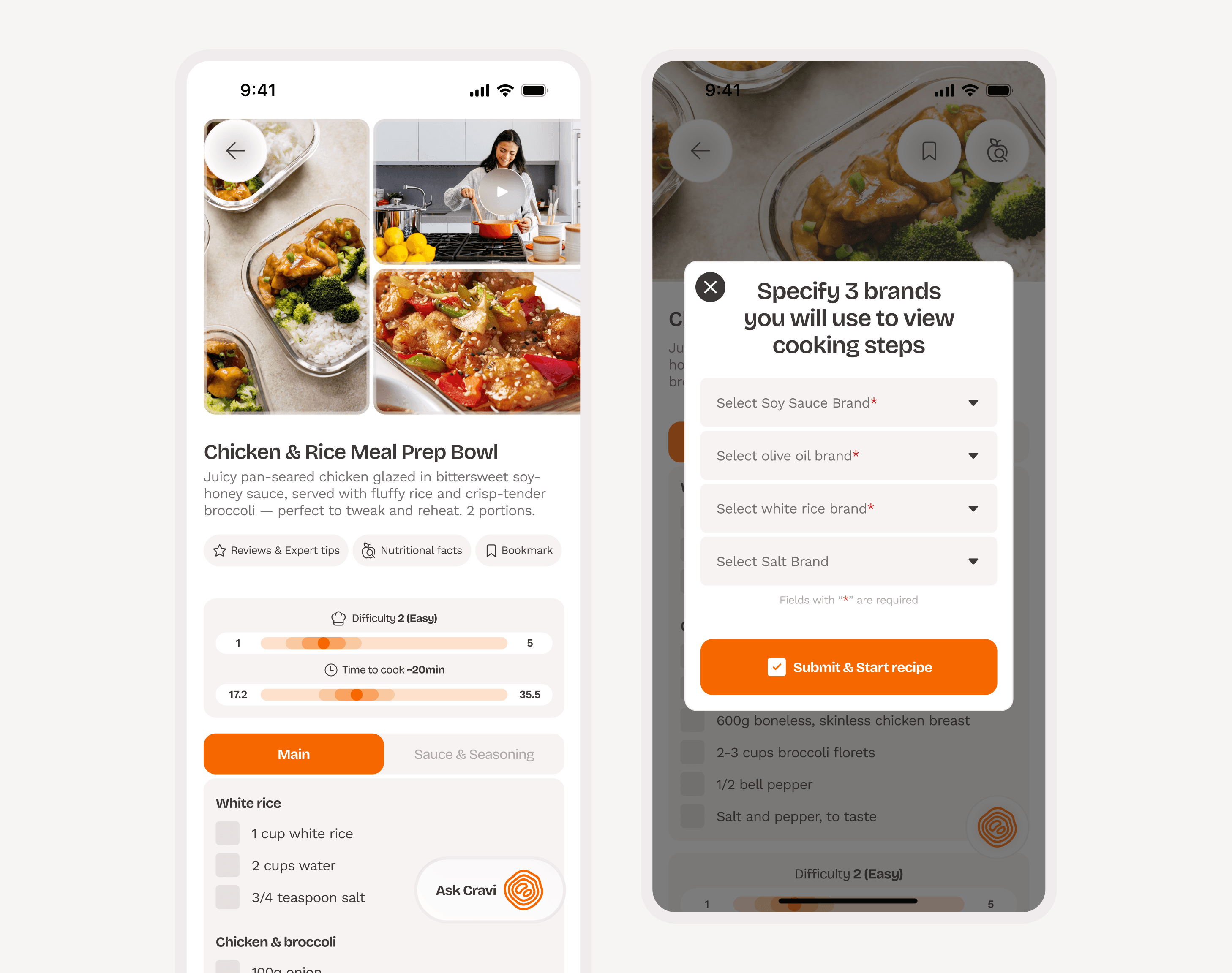
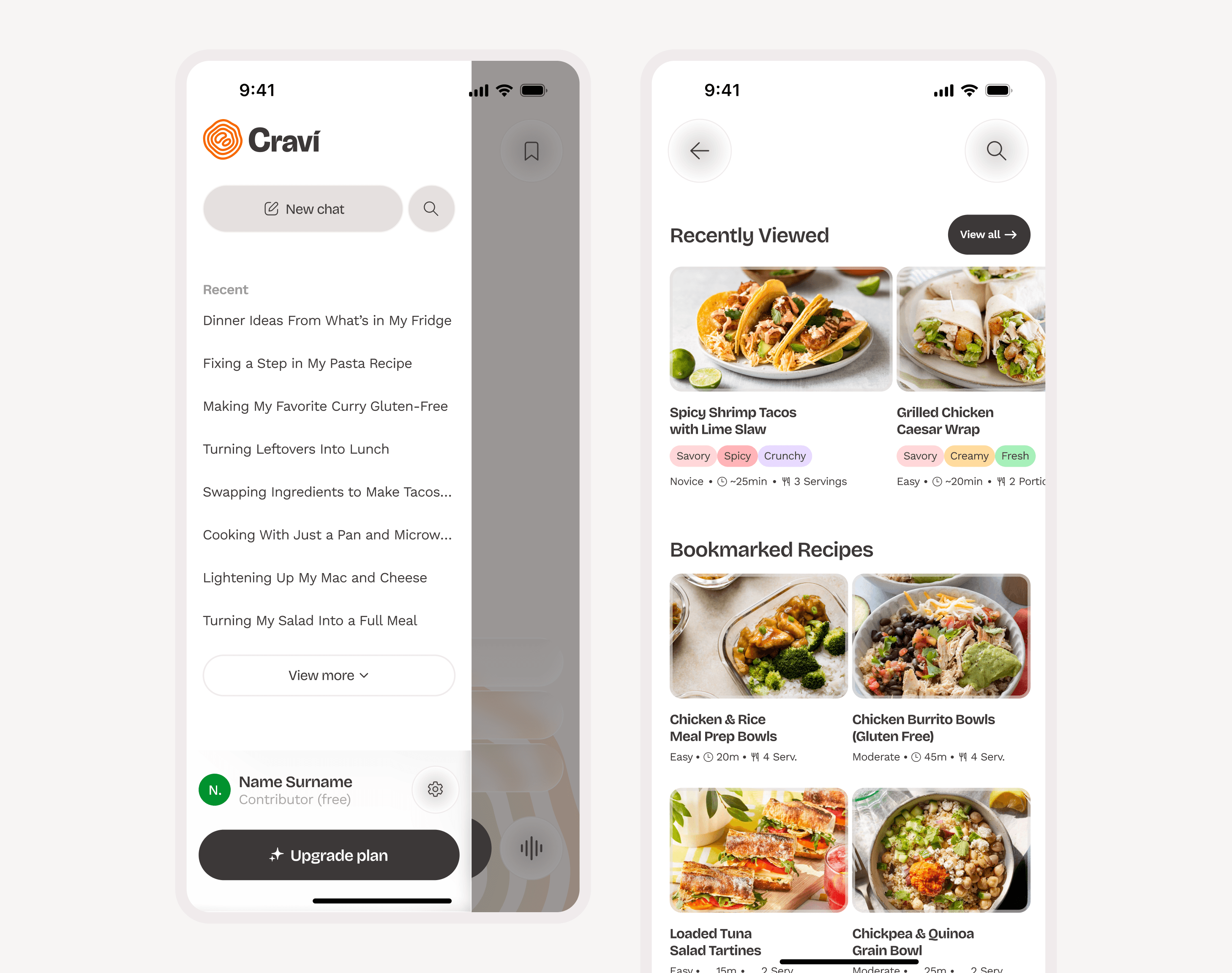
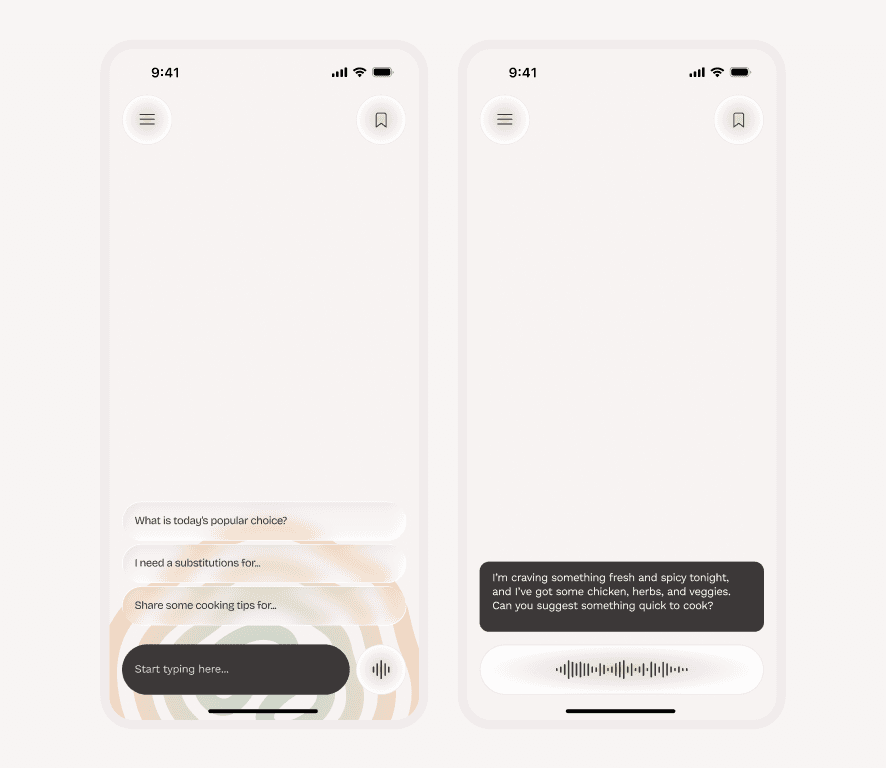
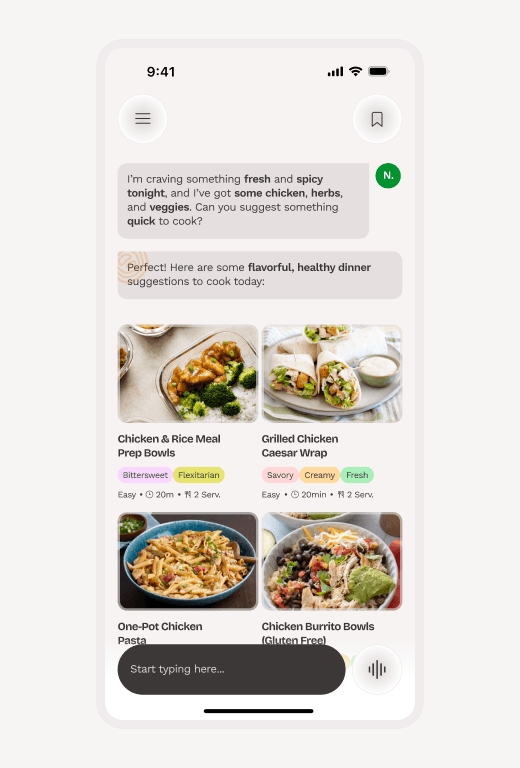
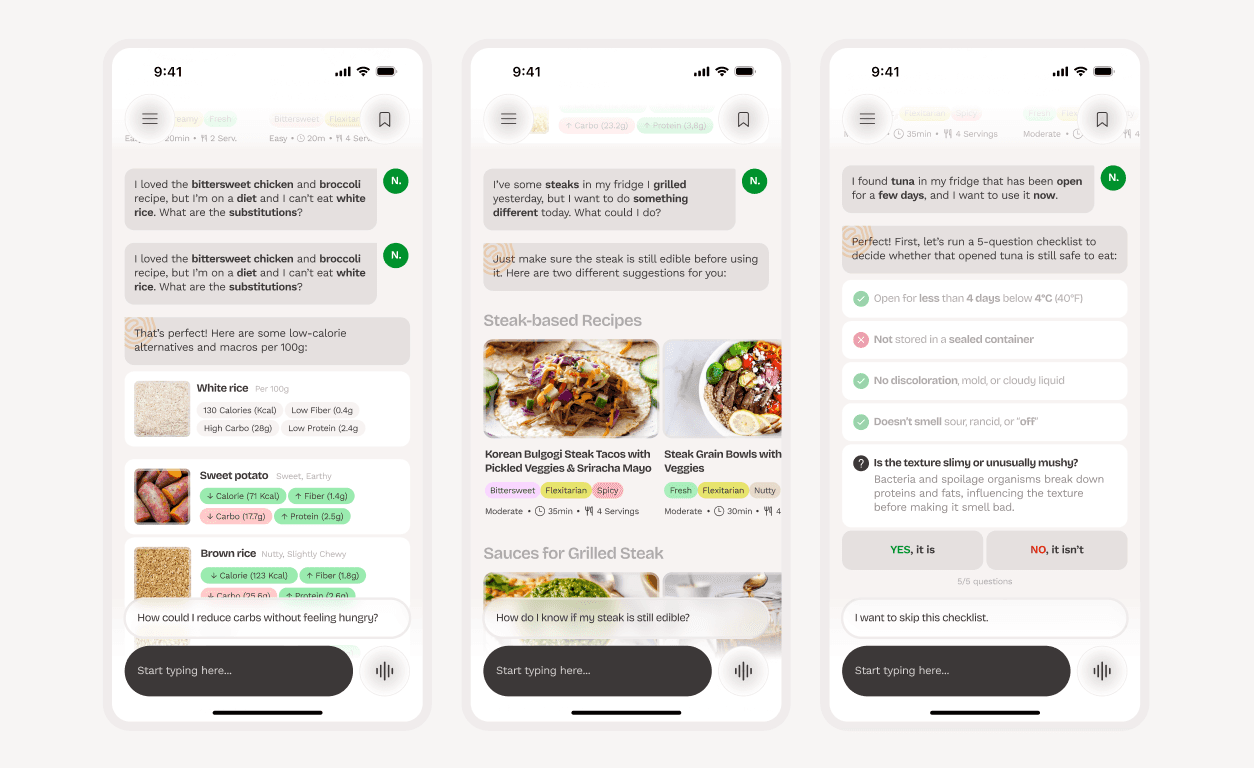
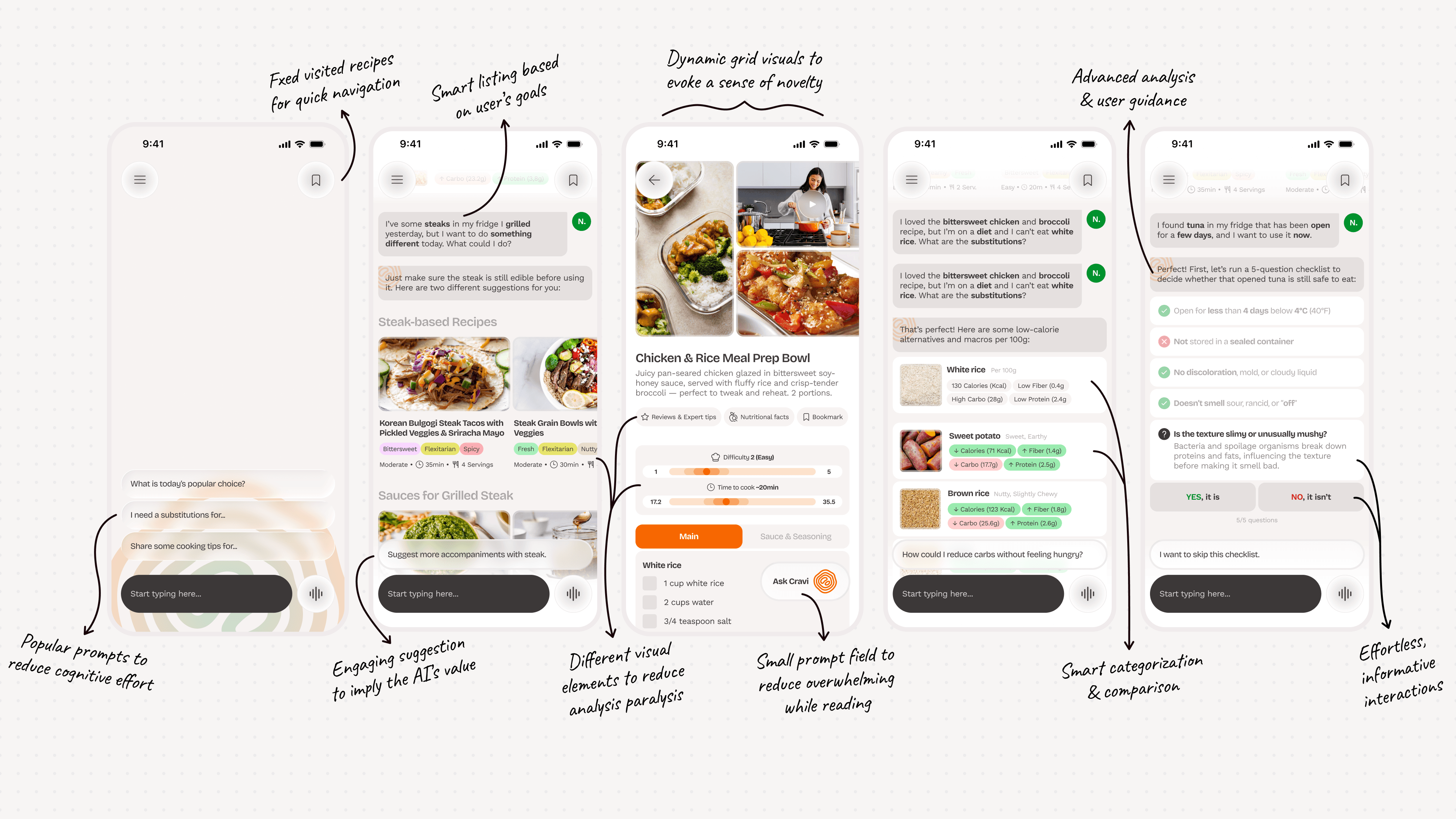
Moving away from passive entertainment, I designed a dynamic interaction between a cook-chef (AI) that personalizes predefined recipes based on user requests, mitigating undesirable outcomes and food-related risks.

The global shift in online searching
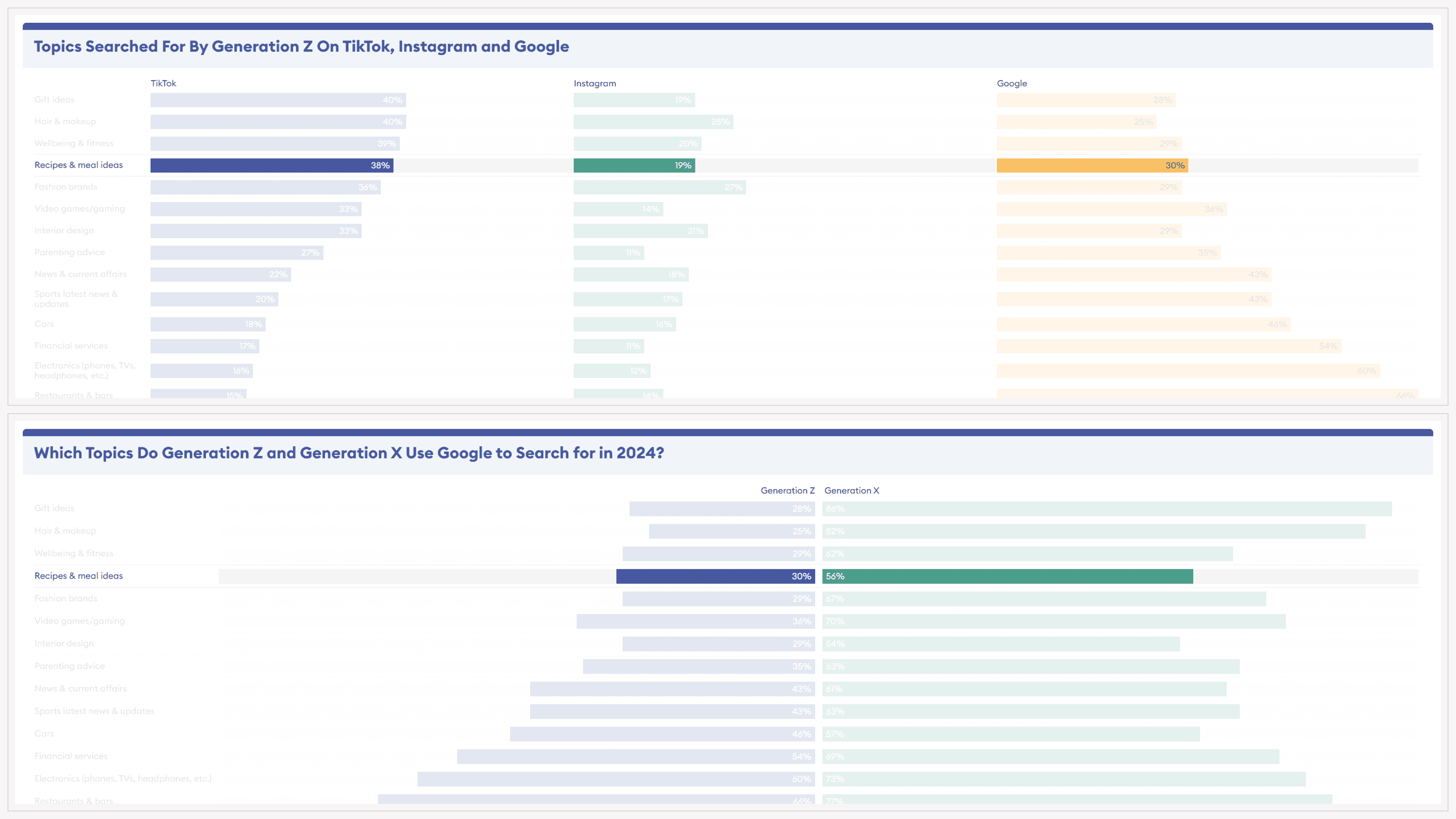
Since 2022, Gen Z (currently aged 13–28) has progressively increased its presence on content-sharing platforms, even replacing the magical method of accessing any information—googling.
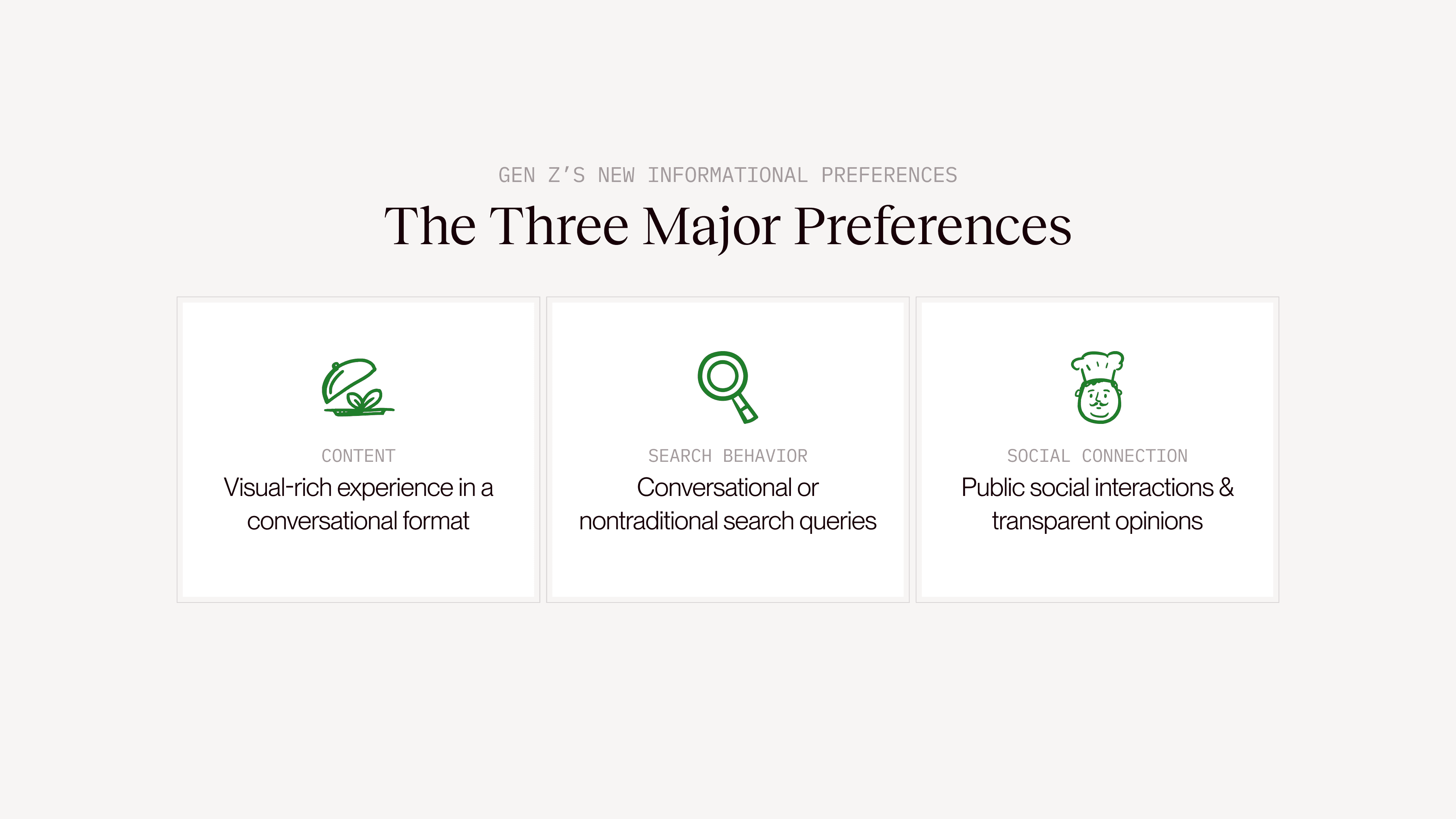
Acknowledged even by Google’s Senior VP, this shift indicates a pivot towards what better suits the new informational preferences of the generation.
Self-realization about SEARCH behaviours
After those articles, I realized how I unconsciously search for recipes now, gathering details from various posts and videos about the same meal, while speculating on incomplete cooking steps.
It was a reflection of how difficult it has become to find decent-quality, reliable cooking content and how much time was spent searching and curating it.
Deepening into missing opportunities
Not everyone is willing to put much work into cooking, so they opt for simple meals or food delivery. Public comments show that the shift brought solutions, but also revealed new gaps.
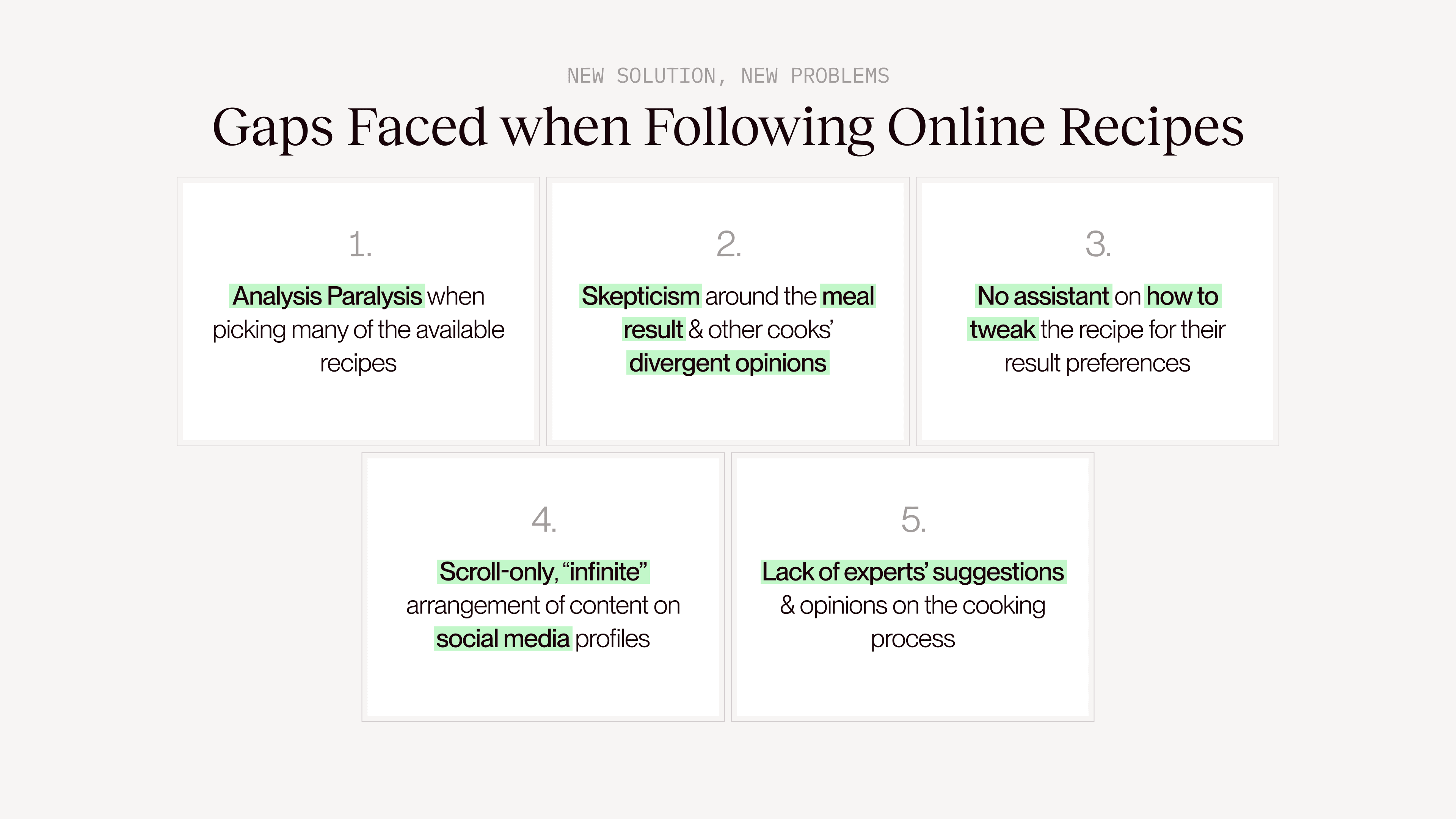
It was a sign to put my studies into practice and explore ways to provide extra value to underserved segments in a saturated market through convenience and delight (a.k.a ‘value-creating decoupling’).
Assumptions, interviews & walkthroughs
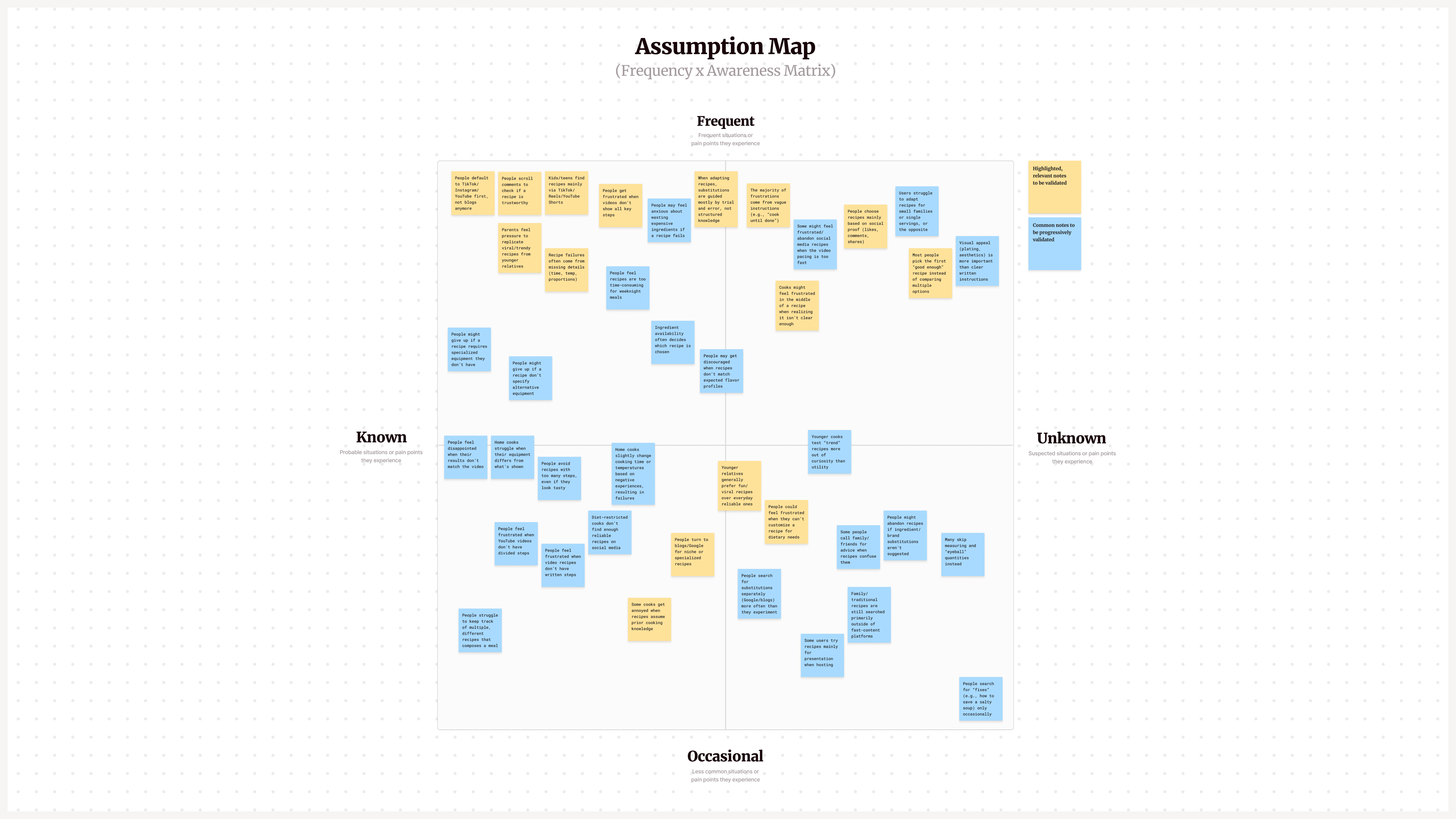
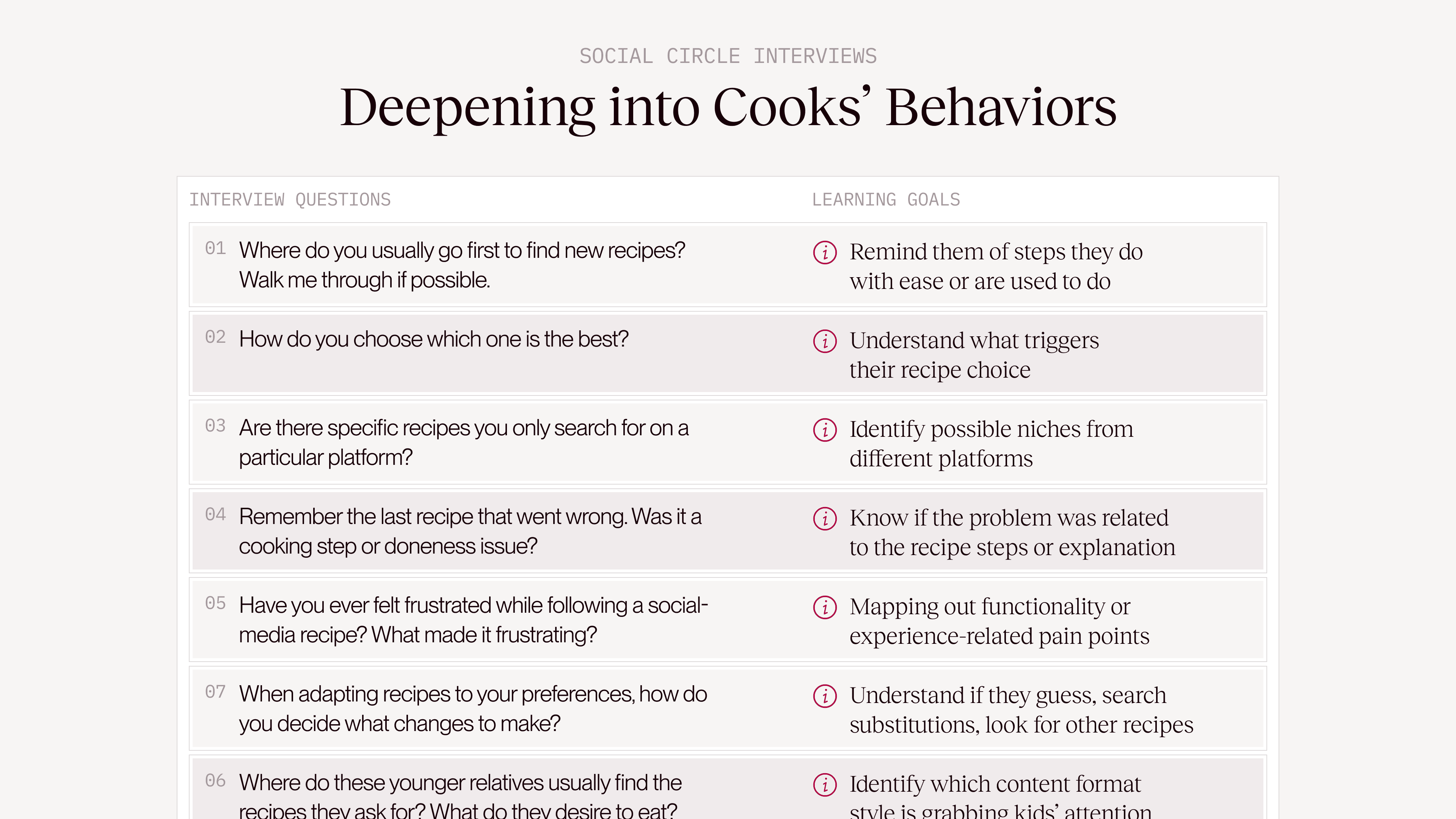
I asked 9 friends and family members to answer 7 questions based on an Assumption Map and to walk me through the steps to find a recipe.
All of them regularly try new recipes, have cooked for younger relatives or guests, or have dietary needs.
My research goals were to understand the transition to these social platforms and identify individual pain points they still face or have started to face.
Synthesis & Key Takeaways
I used GPT-5 to label participants’ patterns and highlight competitors’ (dis)advantages based on their responses.
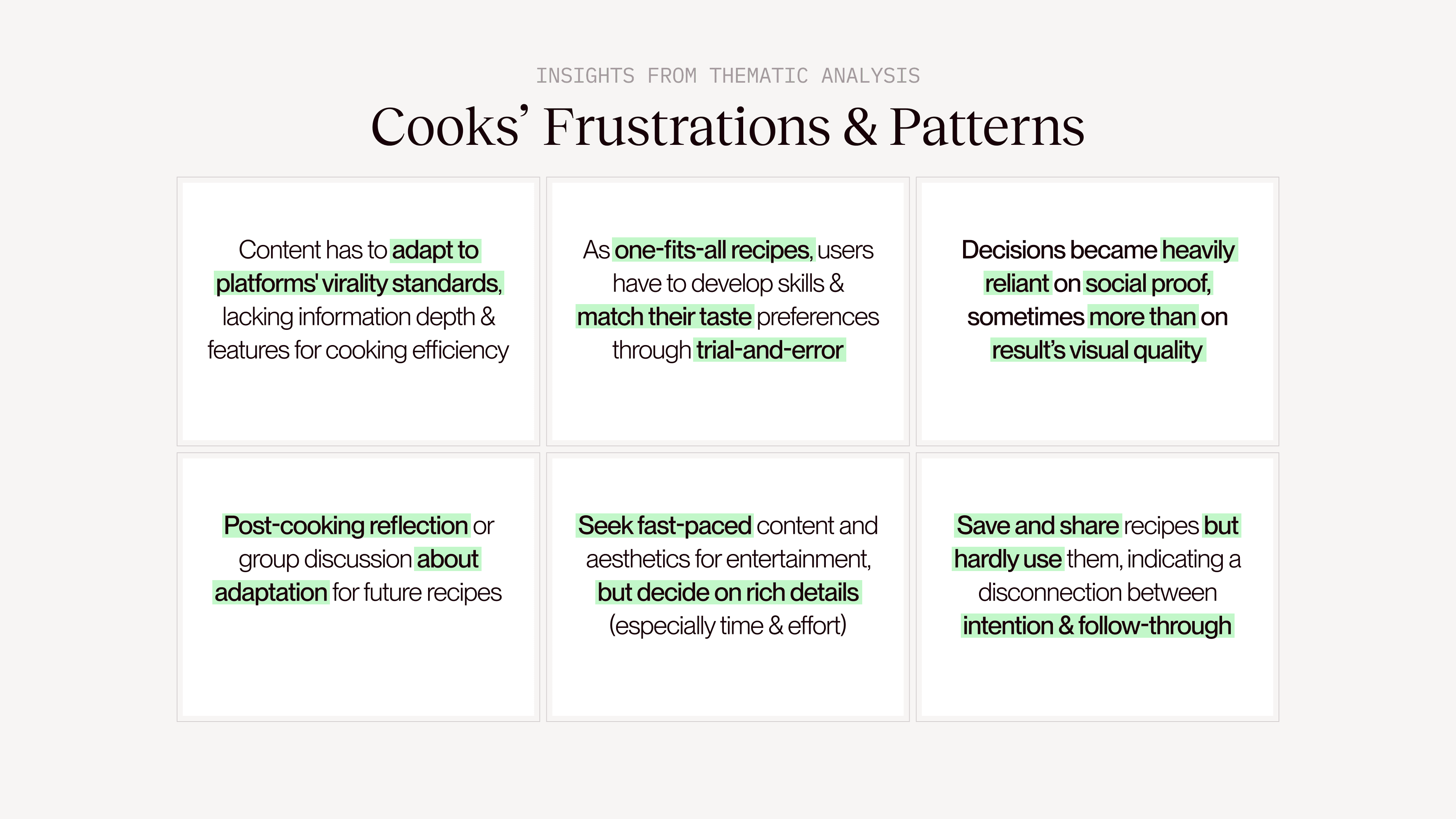
Doing so allowed me to examine the results from different perspectives and concentrate on reviewing the walkthroughs. After concluding both analyses, my primary insights were:
Leveraging generative AI advancement timing
I directed GPT-4o to suggest approaches to address these insights for me to curate, based on users’ core problems and my research key takeaways.
I hypothesized that a human-chef (specialized AI) conversation would address most of the current cooking information gaps, but would rely on static visual engagement, as generative videos are not currently ultrarealistic.
Hypothesis testing & User flow concept
I’ve contacted dozens of people from blog comments and communities who had the profile of potential early adopters to give opinions on the UX and value proposition of my prototype.
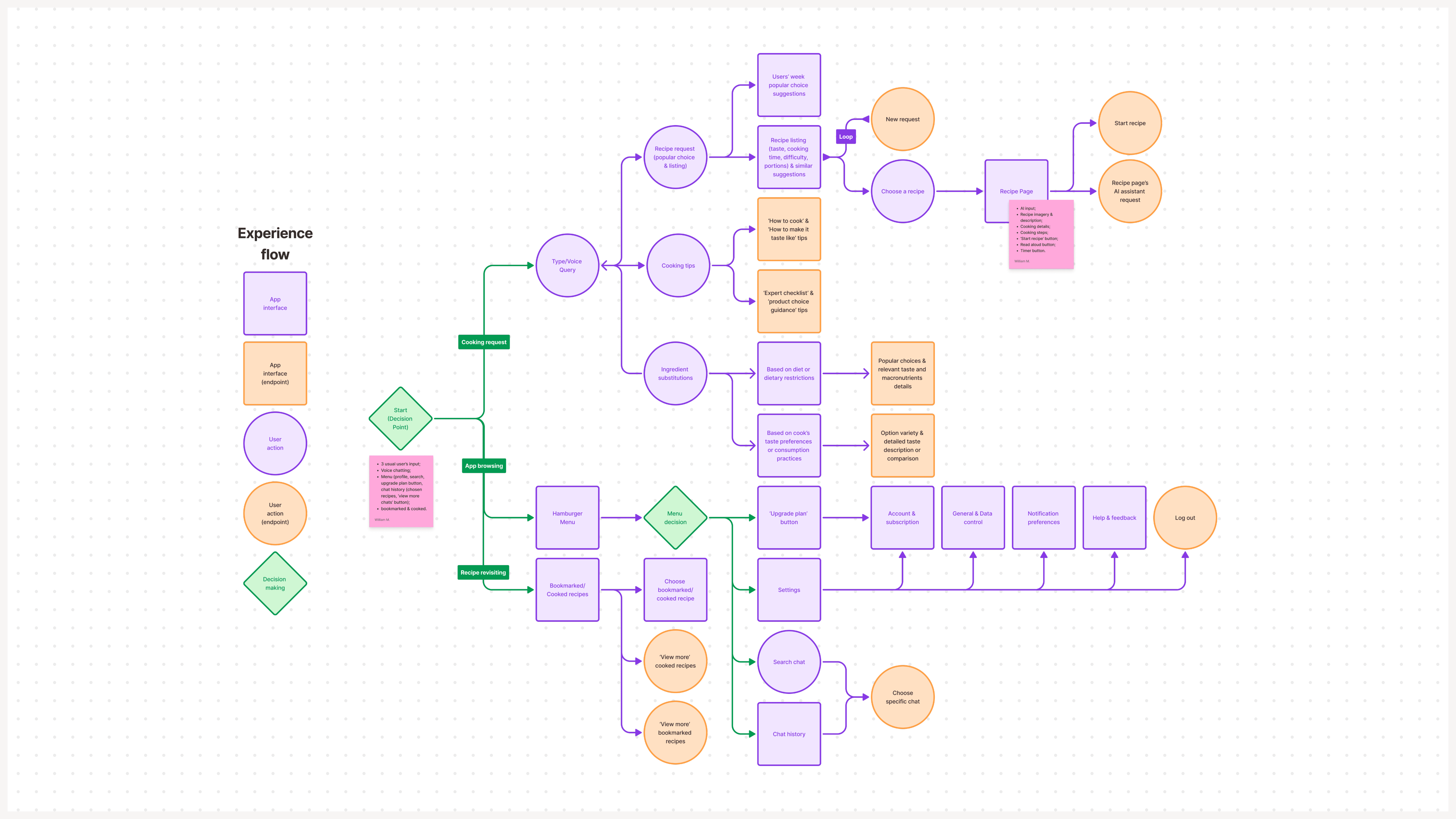
I’ve been using the feedback as mental models to map users’ primary touchpoints and optimize usability and conversational experience (information and tonality).
USER ARCHETYPES & UX improvements
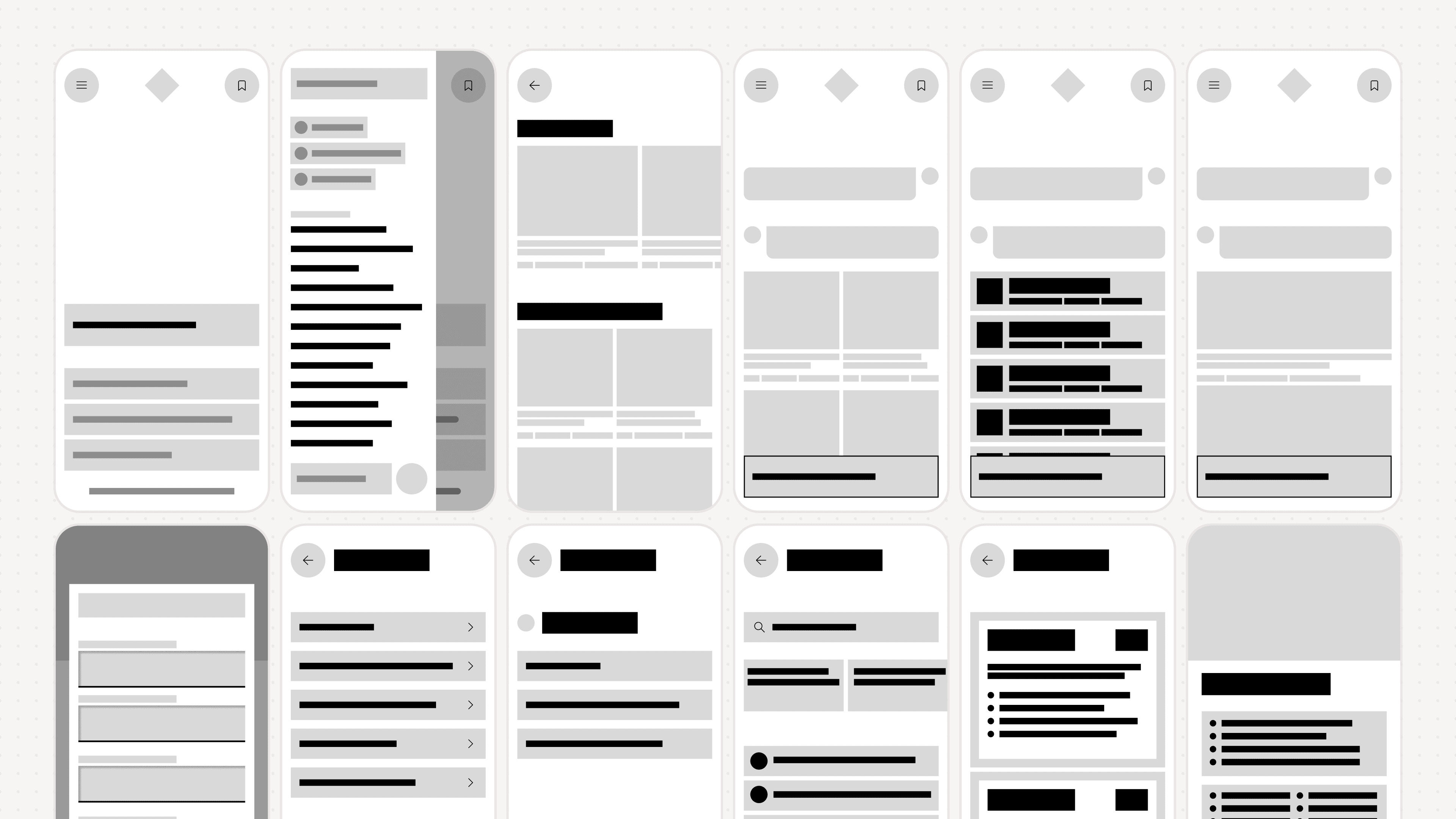
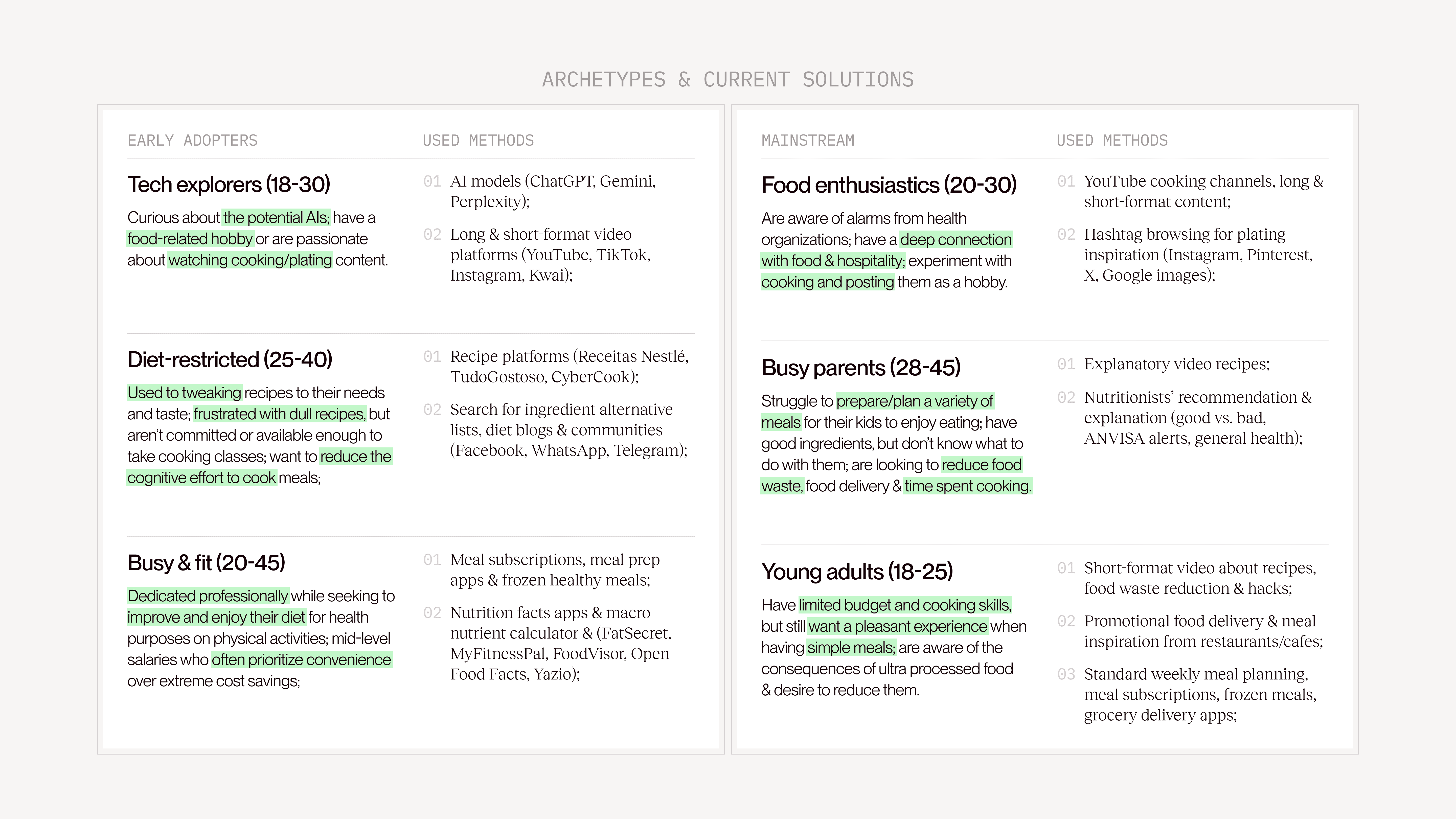
I conceptualized the primary interaction flows of the AI assistant app for two expected types of user profiles: recipe explorers and meal-tailor perfectionists.
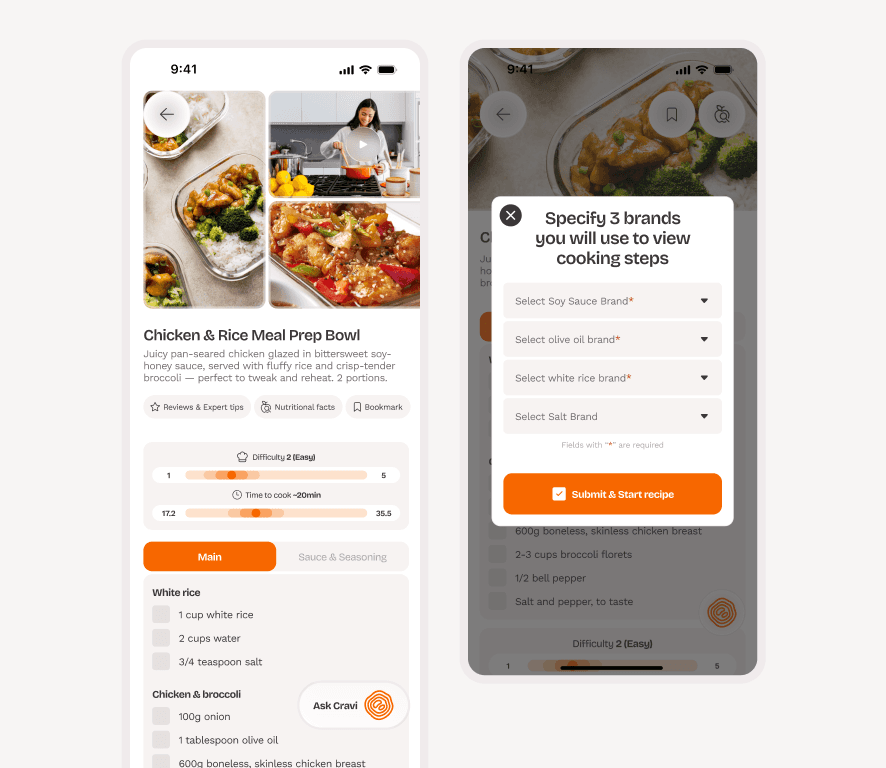
I utilized GPT-5 to ensure technological viability while designing an MVP with classic, yet customizable recipes and recipe suggestion requests based on meals’ characteristics.
Launch metrics & KPIs
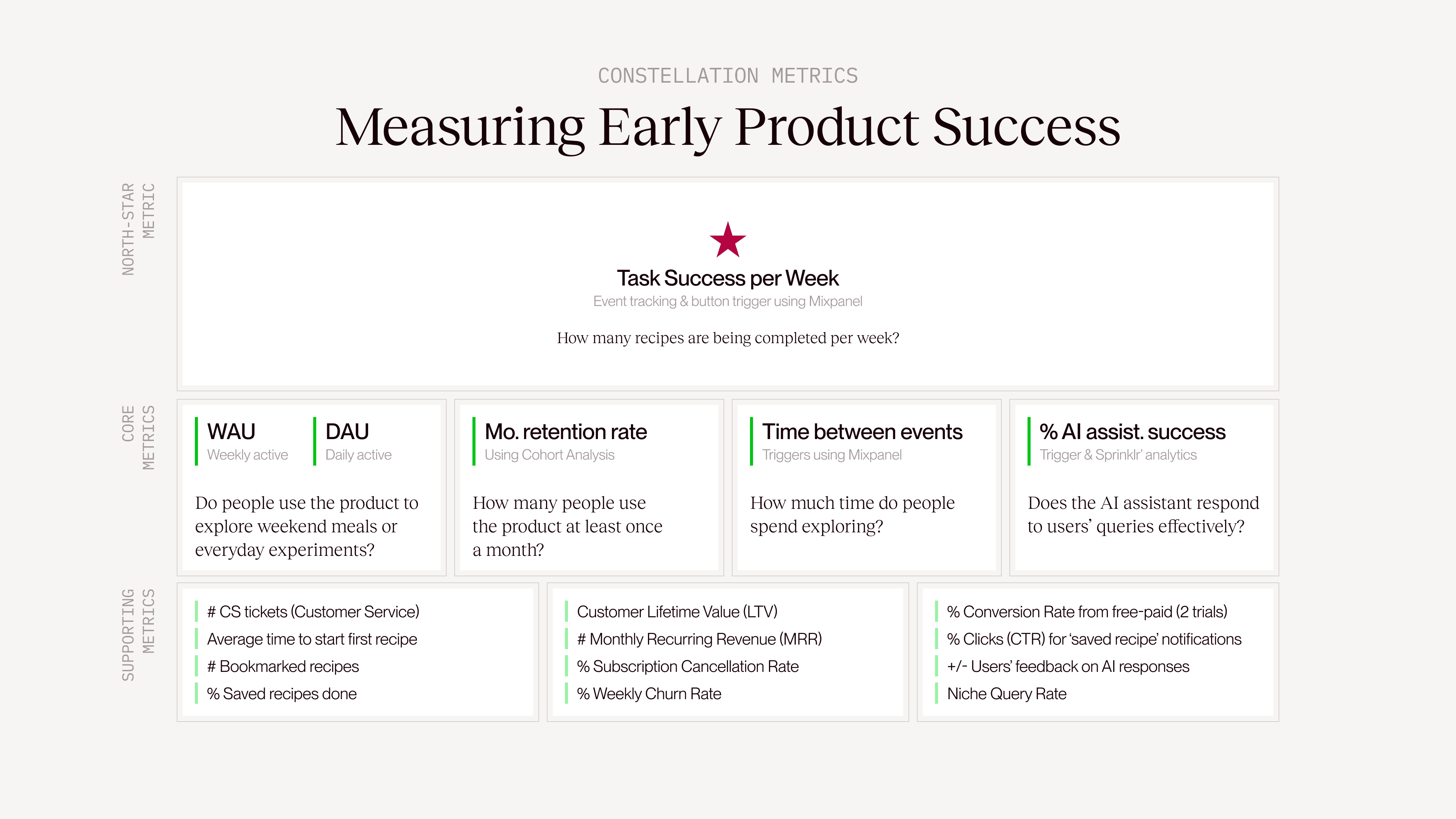
I’ve set a constellation of metrics to track product retention, AI efficiency, and users' engagement and behavior, with Task Success being the north-star metric.
These metrics measure the impact of the product’s core value on business growth—or indicate a need for redirection.
Reflection & Direction
The product addresses user frustrations with competitors, but there are critical flaws that could impact mid-term sustainability (information, trust concerns, a lack of visual content, and the need for chefs’ and experts’ knowledge for model training).
However, the virality of it could influence how people desire their cooking experience to be, leading to a demand for more customized experiences and experimentation with ingredients and flavors.
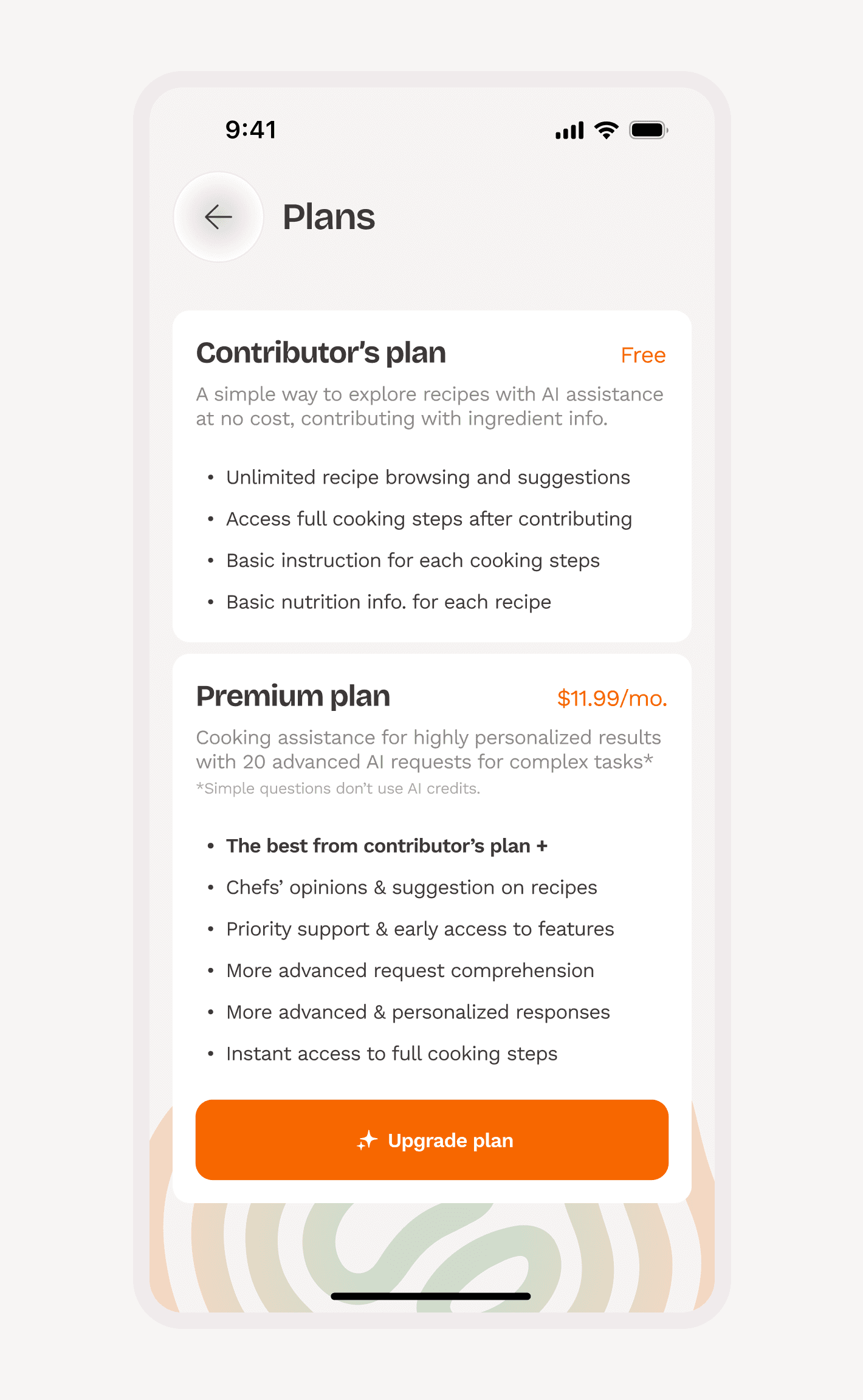
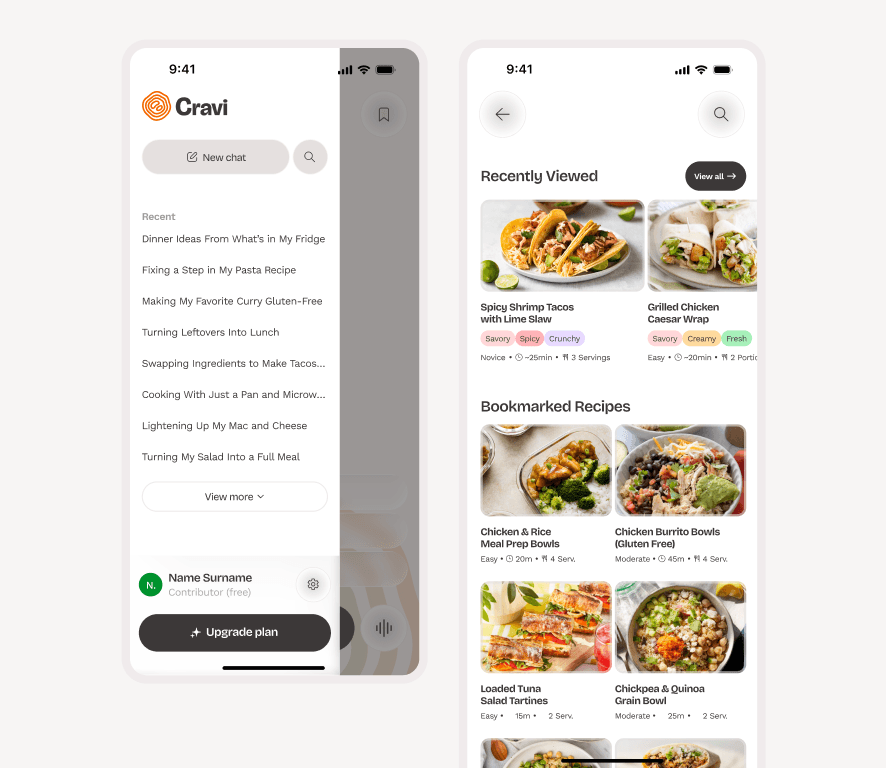
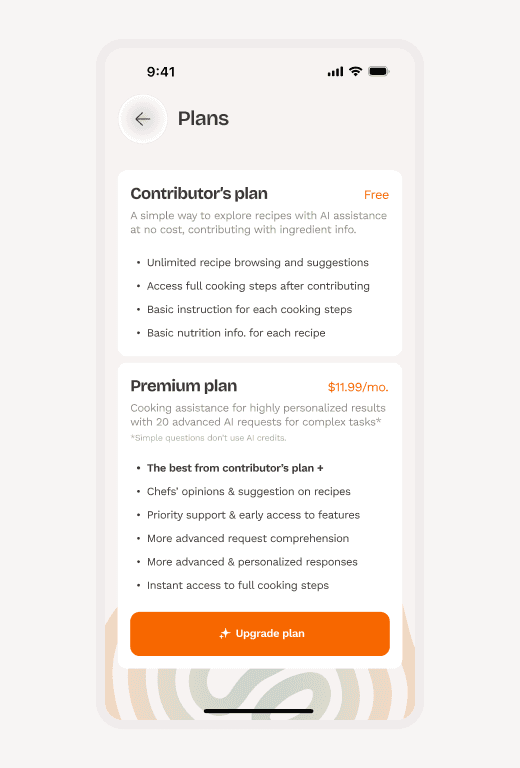
The successive efforts would focus on refining subscription problems: limited AI requests on paid plans to reduce inference costs, disengaging visuals, and data compliance from the ‘contributor plan’ (free access in exchange for the used ingredient brands, which can evolve into B2B reports).